Terug naar overzicht
09/04/2026
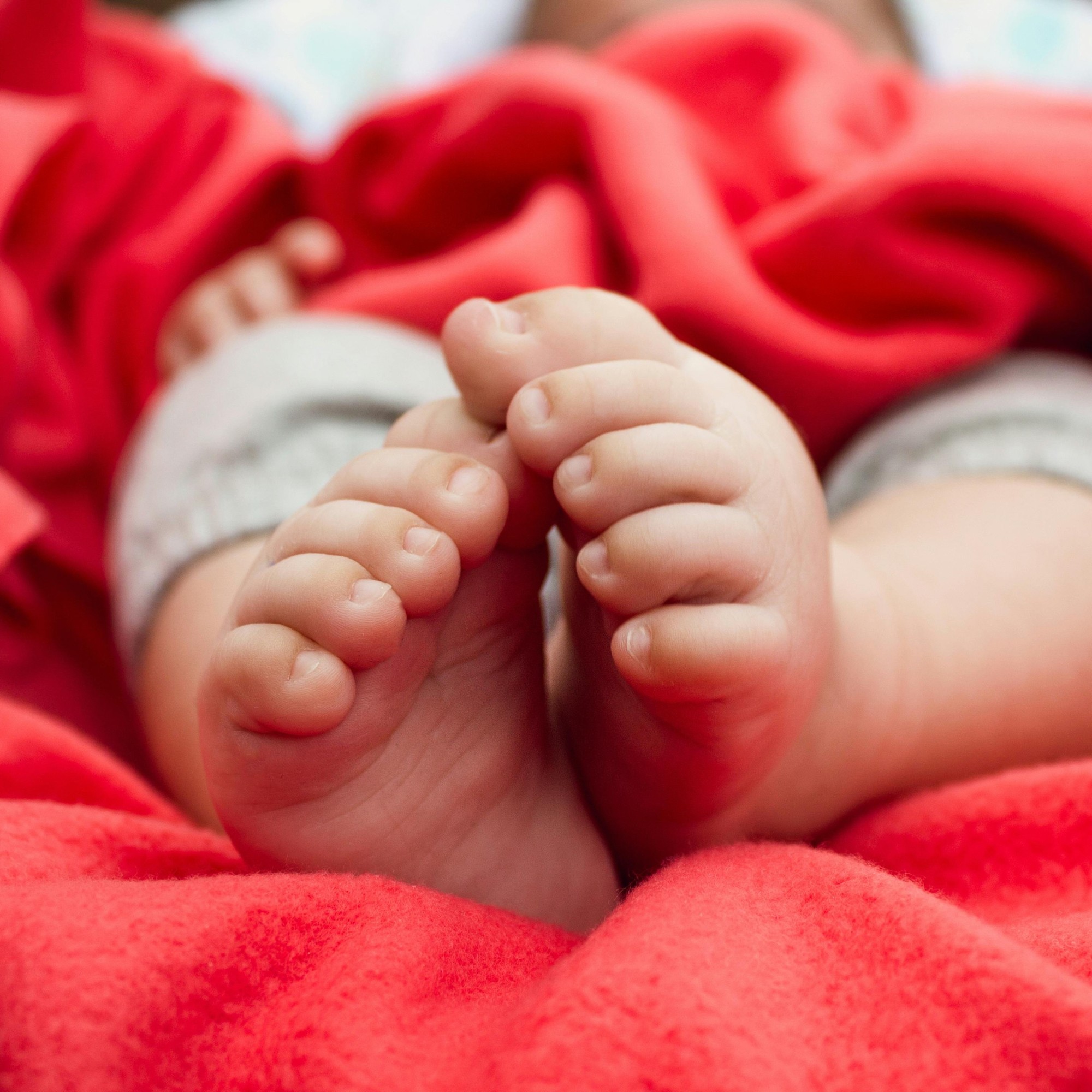
Children’s feet grow faster than most parents expect. One moment shoes fit perfectly, and just a few months later they suddenly feel tight. This can make it difficult to know when a new size is needed. However, foot growth does follow a pattern—although it is less linear than you might think.
On average, children’s feet grow between 1 and 4 shoe sizes per year, but this becomes much clearer when broken down by age group.
During the first years of life, everything develops quickly—and that certainly applies to feet as well. Baby feet consist largely of cartilage, making them flexible but also prone to rapid growth. As long as your child is not yet walking independently, we refer to baby shoes. Once those first steps are taken, first walking shoes provide the proper support for learning to walk.
Between 0 and around 2.5 years, a child’s foot grows on average one size every 3 to 4 months. This means children can easily grow three to four sizes in a single year. This rapid growth is linked to major developmental milestones such as crawling, standing, and taking first steps, during which the feet continuously adapt to new movements and loads.
From about 2.5 to 4 years, the growth rate begins to slow slightly. The foot continues to grow steadily, but less rapidly than in the baby stage.
During this period, feet grow on average one size every 4 to 5 months. Growth often happens in spurts: your child may wear the same size for a while and then suddenly need the next size.
Since children become more active at this stage (running, jumping, climbing), it is especially important that shoes fit well and provide sufficient support.
From 4 years and older, growth becomes more stable. Children’s feet grow on average one size every 5 to 6 months.
However, it is important to note that around the age of 6 to 7 years, it is common for children to remain in the same shoe size for a while. This is completely normal and not a cause for concern. Growth does not always happen evenly—sometimes the body simply takes a short “pause” before the next growth spurt.
So continue measuring regularly, but understand that longer periods without a size change are perfectly normal within a healthy growth pattern.
The difference between a well-fitting shoe and a too-small shoe may seem minor, but it can have significant consequences. Children do not always feel when shoes are too tight, which means problems can develop unnoticed.
Watch for signs such as:
These are often the first indications that the shoe is becoming too small.
A well-fitting children’s shoe ideally has about 1.3 to 1.5 cm of growing room at the front. This provides enough space for growth while still allowing a natural walking motion.
This growing room only works properly when the shoe fits the foot as a whole. That means: the correct width fit and a firm heel counter. Together, they ensure the shoe wraps nicely around the foot and keeps the heel securely in place, providing stability. With a proper fit, you can allow this growth room without compromising comfort.
Many sports brands often lack this combination. Their shoes tend to be too wide and lack proper heel support, which prevents a good fit. As a result, you cannot apply the same 1.3 to 1.5 cm growth room because the shoe simply won’t fit properly. In practice, this means that with many sports shoes, you need to buy the exact fitting size without extra room. Since children’s feet grow so quickly, this leads to needing new shoes more often.
It may seem appealing to buy larger shoes to make them last longer, but in reality, this often works against you. Too much space can cause several issues:
Instead of the shoe adapting to the foot, the child has to adapt to the shoe—and that is exactly what you want to avoid.
Because growth is not perfectly predictable, it is important to check shoe size regularly. A simple way to do this is to remove the insole and have your child stand on it. If there is still some space left in front of the longest toe, the shoes still fit.
Also remember that feet can differ in size. Always check both feet and go by the larger one.
Children’s feet grow at a decreasing rate as they get older. While babies (0–2.5 years) typically need a new size every 3 to 4 months, this shifts to about 4 to 5 months for toddlers (2.5–4 years), and 5 to 6 months per size from age 4 onward.
Even then, growth is not perfectly linear. Around the age of 6 to 7 years, it is common for children to keep the same shoe size for a while. This is completely normal and part of a healthy growth cycle.
The most important factor remains balance: enough growing room (around 1.3 to 1.5 cm), but never too much. By checking regularly and choosing properly fitting shoes, you give your child the best foundation for healthy feet.
 Onze klanten geven ons gemiddeld 4,7/5 sterren