Terug naar overzicht
13/11/2026
You don't have to wait until your child can walk independently before putting on their first shoes. From around 6 months, you can already choose soft pre-walker shoes.
These soft baby shoes are ideal for babies who are starting to crawl, pull themselves up or carefully attempt to stand. They help your little one get used to wearing something on their feet. Pre-walker shoes are deliberately designed to be very flexible and do not have a reinforced heel counter or a shank in the sole. This is not necessary as long as your baby mainly crawls and is not yet walking independently. The sole is also constructed differently from that of proper first walking shoes. It does not contain a metal shank or reinforcement plate. This keeps the entire sole flexible, allowing it to move easily with your baby's feet. Pre-walker shoes usually have an anti-slip layer on the bottom or a fully rubber sole to help prevent your child from slipping on smooth surfaces. They also keep little feet nice and warm. We recommend choosing leather pre-walker shoes. Baby feet can sweat quite a lot. They have just as many sweat glands as adult feet, but concentrated on a much smaller surface area. Thanks to its breathable properties, leather helps maintain a comfortable environment for little feet.
As soon as your child starts taking their first independent steps, it is time to switch to their first walking shoes. For many children, this happens somewhere between 10 and 15 months, although every child develops at their own pace.
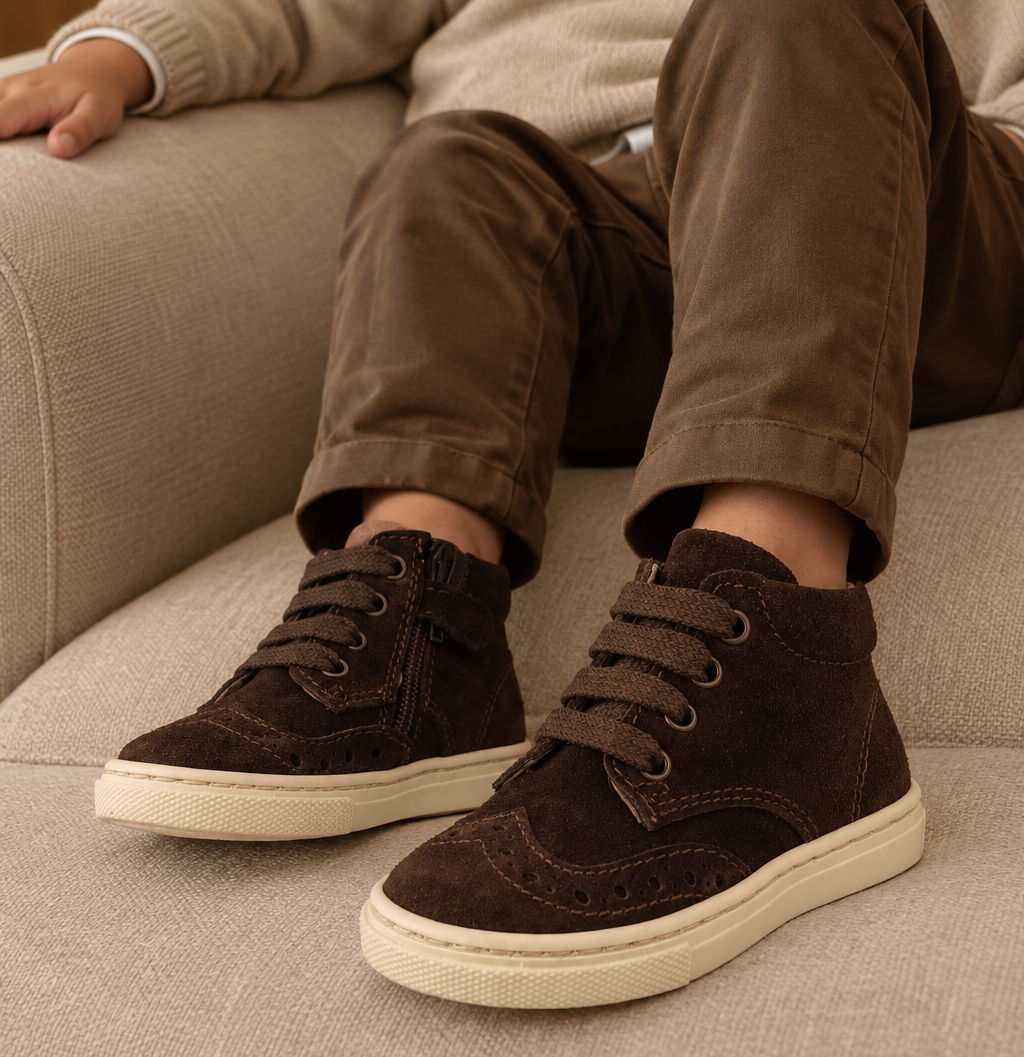
Unlike pre-walker shoes, first walking shoes have a reinforced heel counter and, depending on the model, may also have a shank in the sole. The reinforced heel counter wraps around the heel bone and provides extra support and stability while walking. The shank is a small metal reinforcement plate built into the sole. It prevents the sole from bending freely along its entire length. This helps guide the foot's rolling motion to the correct point, namely the toe area. The forefoot can therefore remain flexible, while the middle section of the sole retains sufficient support. A good first walking shoe combines the necessary support and stability with enough freedom of movement around the forefoot.
Discover our collection of children's shoes online in our webshop.
Pre-walker shoes and first walking shoes
 Onze klanten geven ons gemiddeld 4,7/5 sterren