Back to overview
25/09/2026
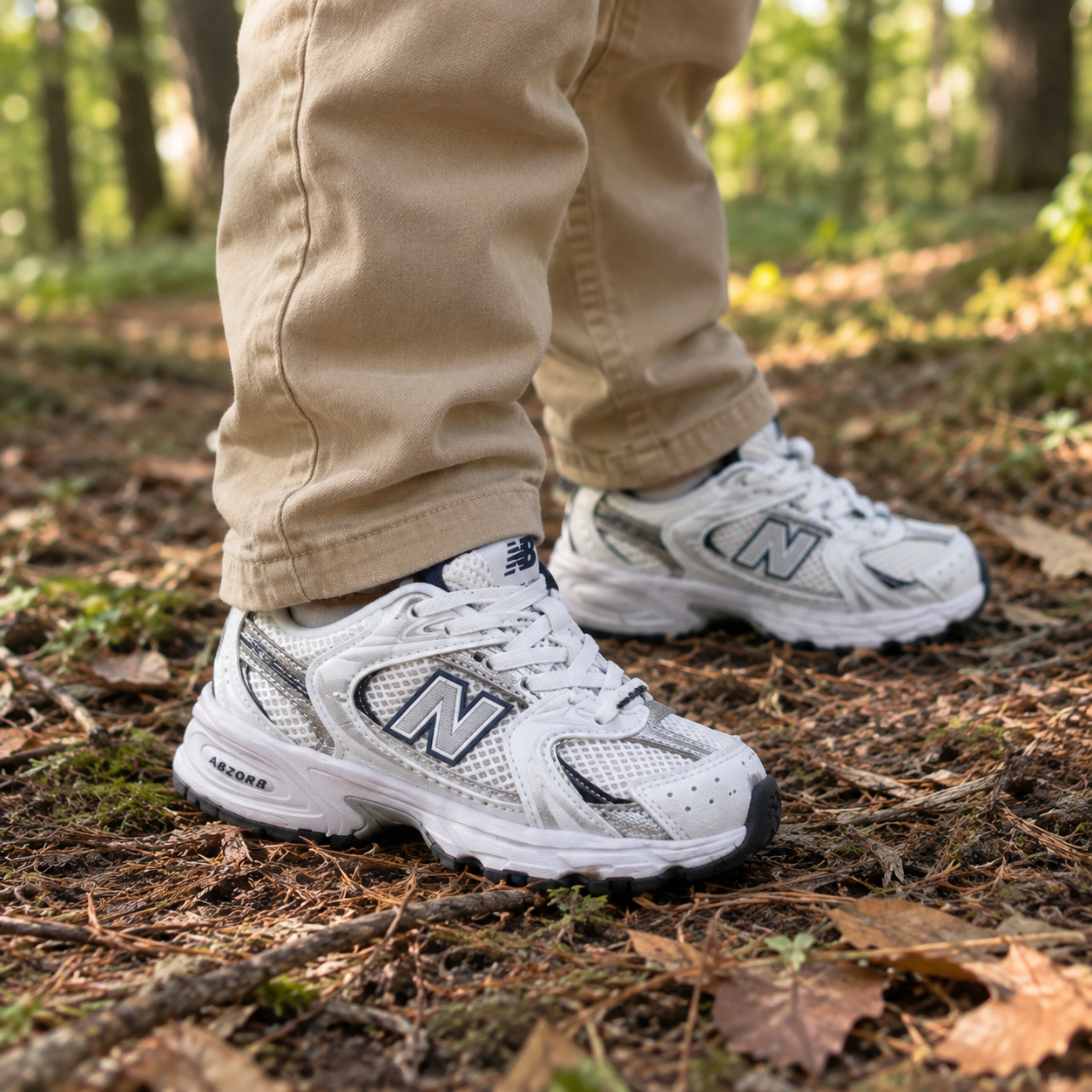
We see children coming in every day for a new pair of shoes. And one thing regularly stands out: almost every child who comes in wearing New Balance sports shoes is wearing shoes that are too small. When we check the inside length, there is often little to no room left for growth. We see this in dozens and even hundreds of children. Especially with sports shoes from brands such as New Balance and Nike, we regularly notice that the combination of sizing and fit can cause problems.
Many international sports shoes are manufactured in the Far East and therefore have a different last shape and sizing system from many European children's shoes. In our store, we regularly find that sports shoes fit half a size or even a full size smaller than European children's shoes. At the same time, they are often much too wide around the heel and forefoot. This means a shoe can be too small while also being too loose around the foot.
When parents then try a larger size, it often feels too loose and the heel may lift while walking. They therefore quickly choose the smaller size because it seems to fit better. However, that smaller size is then too short and does not leave enough room for growth. Elastic laces do not make this any better either, as they cannot be adjusted or tightened in the same way as regular laces. As a result, we regularly see children wearing New Balance or other sports brands that are too short in length while still not providing enough support around the foot.
A child's foot needs enough room to grow, while also being properly supported and stable inside the shoe. The right last is essential: the shape and width of the shoe should match the shape of the child's foot. The heel should also be properly enclosed so that the foot does not constantly move inside the shoe. The sole is important too. A shank provides additional stability through the heel and middle of the sole, keeping the sole stable while allowing a good roll-through at the toes. This gives the foot the right support and a natural roll-through while walking.
As well as the fit, we regularly see very warm and sweaty feet in sports shoes. Synthetic materials used in sports shoes absorb less moisture than leather, which can leave socks quite damp after several hours of wear. A warm and moist environment can contribute to skin irritation and create favourable conditions for fungi. That is why we recommend using sports shoes mainly for what they are designed for: sports. For everyday use, we prefer a high-quality children's shoe with a leather lining and a good fit.
You do not have to wait until your child complains about pain or discomfort, as not every child can communicate this clearly at every age. After 3 to 5 months, depending on your child's age, check again whether the shoes still fit properly. Remove the insole and let your child stand on it with their foot. This makes it easy to check how much room is left in front of the toes. For a new pair, around a finger's width of room for growth is a good guideline.
So don't look only at the shoe size or the "well-known brand". Ultimately, it is the foot that determines which shoe fits properly. A New Balance size 30 can therefore have a very different inside length and fit from a size 30 made by a European children's shoe manufacturer. The stated shoe size is not automatically the right size for the foot. For everyday use, we recommend choosing leather shoes and keeping sports shoes for sports.
Discover our quality children's shoes
 Our customers give us an average rating of 4,7/5 stars